
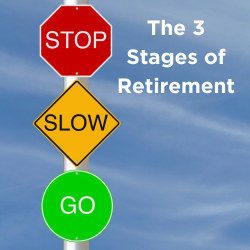
The 3 stages of retirement
Depending when you retire and how long you live, your retirement could potentially last 30 or more years. Most retirements consist of three stages, each of which is typically 5-10 years in length. Furthermore, each stage has its own spending characteristics. Understanding these stages can help you feel more comfortable in knowing what your spending in retirement may look like.
The three stages of retirement and their typical spending patterns are:
1. “Go-Go” years (the first 5-10 years of retirement) - Physical and mental health are strong so it’s common to be active with travel, hobbies, leisure activities and visiting family. Discretionary spending is often high as time and money are spent on taking large trips which weren’t able to be taken during working years, frequent travel to visit relatives and friends, dining out, partaking in physical hobbies, using and maintaining vacation properties, etc.
2. “Slow-Go” years (the next 5-10 years) - Physical health is still generally good but frequent or strenuous activity starts to become difficult. Mental acuity could still be sharp but cognitive decline often begins. Extended duration or physically demanding travel is no longer likely. Highly physical hobbies and activities may not be feasible. Time is spent predominantly on lower-key endeavors such as indoor activities, social gatherings, etc. Discretionary spending usually declines without significant increases in other expenses.
3. “No-Go” years (the final 5-10 years) – Physical and/or mental health are significantly degraded. Activities outside of the house are limited. Travel and physical leisure activities are no longer possible. Full-time living or medical assistance may be required. Discretionary spending is minimal but medical expenses increase substantially.
In many cases, total spending declines throughout retirement. Discretionary spending is largest in the go-go years but often decreases significantly during retirement. However, medical expenses may markedly increase over time. Also, keep in mind that each of the three phases may last more or less than the typical 5-10 years. Or a phase(s) may be skipped altogether, depending on life circumstances.
What does this mean for you and your retirement??? Understanding how your retirement spending needs may change can help ease the concern and fear of the unknown when creating a multi-decade retirement plan.
With a proper retirement plan in place, it’s okay to give yourself permission to spend on travel, experiences and other “fun” things during your go-go years. However, a good retirement plan should also address what expenses could look like in your no-go years as major medical issues may arise.
Disclaimer:
None of the information provided herein is intended as investment, tax, accounting or legal advice, as an offer or solicitation of an offer to buy or sell, or as an endorsement, of any company, security, fund, or other securities or non-securities offering. The information should not be relied upon for purposes of transacting securities or other investments. Your use of the information is at your sole risk. The content is provided ‘as is’ and without warranties, either expressed or implied. Tenon Financial LLC does not promise or guarantee any income or particular result from your use of the information contained herein. Under no circumstances will Tenon Financial LLC be liable for any loss or damage caused by your reliance on the information contained herein. It is your responsibility to evaluate any information, opinion, or other content contained.