
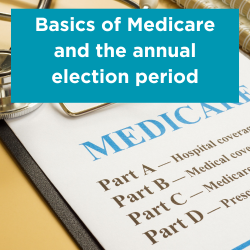
The basics of Medicare and the annual election period
Most folks know there is a government-run health insurance system for people 65 or older. And most folks know the name of that system is Medicare.
However, beyond that, I find that many people who aren’t yet of Medicare age often know very little about how the system works.
Episode 46 of the Retirement Planning Education, was part 1 of 2 of a conversation I had with Danielle Roberts, founder of Boomer Benefits, a Medicare insurance agency based in Texas. Part 2 was episode 47.
Danielle is a leading expert in Medicare and was gracious enough to share her time and knowledge to walk through how the system works, how much it costs, what it covers and what it doesn’t cover, what to consider when signing up and reviewing your coverage, pitfalls to watch out for, etc.
I thought it would be good to release these episodes during Medicare’s “annual election period,” which is October 15 through December 7.
If you’re looking for full details about all-things Medicare and what you can and can’t do during the annual election period, definitely check out the podcast here.
For those of you who want the quick and dirty summary, read on!
Most people need to sign up for Medicare within a few months before or a few months after the month of their 65th birthday. If you don’t sign up during that initial enrollment period, you may have to pay additional penalties – for LIFE – when you do eventually sign up.
Medicare has four main parts (which I’m summarizing at a VERY high level):
- Part A is hospital coverage
- Part B is outpatient coverage
- Part C is Medicare “Advantage”
- Part D is prescription drug coverage
Everyone who signs up essentially needs to have Parts A and B, which are considered “traditional” Medicare.
Part C is optional and is otherwise known as Medicare “Advantage.” Whereas traditional Medicare is administered by the government, Medicare Advantage plans are administered by commercial health insurance companies, similar to health insurance coverage you’ve probably had most of your life prior to Medicare. Advantage plans may cover some services that traditional Medicare does not, such as dental, vision, hearing aids, chiropractic services and podiatry.
Part D is also optional and is for those who want insurance coverage for prescription drugs.
Supplemental, aka “Medigap,” insurance is additional insurance you can buy that supplements the coverages of traditional Medicare, which does not cover all expenses of all services.
Medicare’s annual election period is the time of year where you can add, remove or change Part C and Part D coverage.
Medicare is a very convoluted system. Hopefully you find the podcast helpful in demystifying it!
Disclaimer:
None of the information provided herein is intended as investment, tax, accounting or legal advice, as an offer or solicitation of an offer to buy or sell, or as an endorsement, of any company, security, fund, or other securities or non-securities offering. The information should not be relied upon for purposes of transacting securities or other investments. Your use of the information is at your sole risk. The content is provided ‘as is’ and without warranties, either expressed or implied. Tenon Financial LLC does not promise or guarantee any income or particular result from your use of the information contained herein. Under no circumstances will Tenon Financial LLC be liable for any loss or damage caused by your reliance on the information contained herein. It is your responsibility to evaluate any information, opinion, or other content contained.